

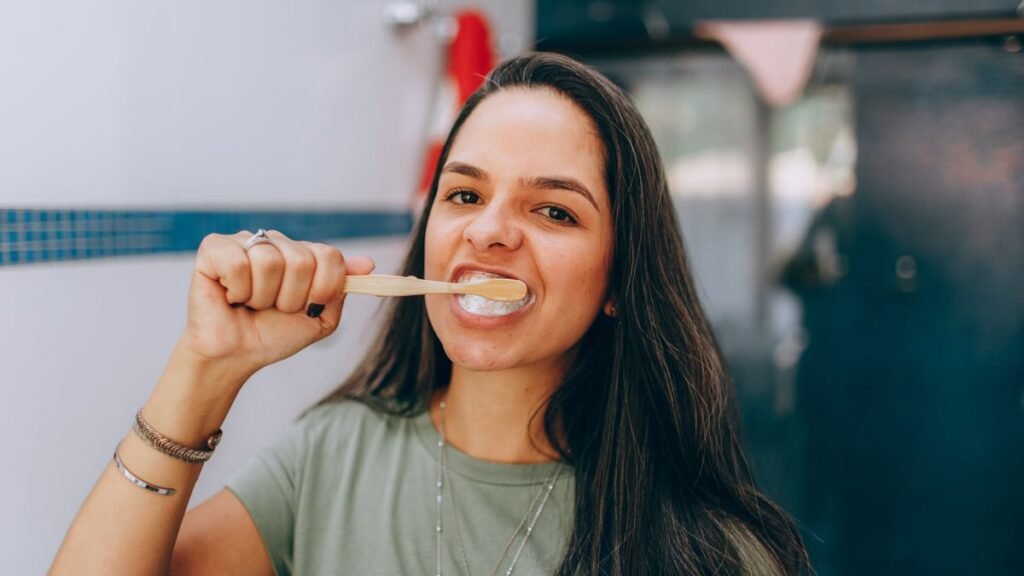
Brush before you use whitening strips, but not right before. Give it a gap, ideally 15 to 30 minutes, so your gums settle and the strips stick properly. Don’t brush right after you take the strips off either. Wait a bit, then brush gently. Brushing hard immediately before or after is the main way people turn a normal strip session into a week of sensitivity.
This trips up almost everyone, and the strip boxes are vague about it. Here’s the order that actually works, and why the timing matters more than people think.
The short version
| Step | Do this | Why |
|---|---|---|
| 15 to 30 min before | Brush gently with a soft brush, then wait | Clears plaque so peroxide contacts the tooth, and lets gums recover before contact |
| Right before applying | Dry teeth lightly with a tissue, apply strips | Strips adhere better to dry enamel |
| During | Leave strips on for the box time, no more | Longer doesn’t whiten more, it just irritates |
| Right after removing | Rinse or wipe away gel, wait a few minutes | Enamel is briefly more vulnerable after peroxide contact |
| A few minutes after | Brush gently if you want, or just rinse | Removes leftover gel without scrubbing softened enamel |
Why brush before at all?
Plaque and food film sit between the peroxide gel and your enamel. Brush first and the gel actually contacts the tooth surface it’s meant to work on. Skip it and you’re partly bleaching a layer of gunk.
The reason not to brush immediately before is your gums. Brushing stirs up the gum line a little, and peroxide on freshly agitated gum tissue stings more and can leave white patches for a few hours. Crest’s own guidance for Whitestrips says to let some time pass after brushing before you apply, to avoid gum irritation. A 15 to 30 minute gap covers it.
Why not brush right after?
After peroxide contact, the very surface of your enamel is temporarily a bit softer and more porous. Scrub it hard in that window with an abrasive whitening toothpaste and you can wear a little more than you meant to, and dial up sensitivity.
You don’t have to skip brushing entirely. Just don’t go straight from peeling off the strip to a vigorous scrub. Rinse the gel away, wait a few minutes, then brush gently with a soft brush and a regular fluoride toothpaste. Save the whitening toothpaste for a different time of day.
Should you brush at all after, or just rinse?
Either is fine. Some people rinse thoroughly with water right after, then do their normal gentle brush before bed. Others do a light brush a few minutes after removing the strips to clear the sticky feeling. What matters is that it’s gentle and not instant. The ADA notes that tooth sensitivity and gum irritation are the common side effects of peroxide whitening, and both are usually temporary, but rough brushing at the wrong moment makes them worse and longer.
A few things that make strips hurt less
Use a soft or extra-soft brush for the before-and-after brushing, not a medium one. Don’t leave strips on past the box time, thinking it’ll work faster. It won’t, and the extra contact is pure downside. If you’re already prone to sensitive teeth, run a sensitivity toothpaste for a week or two before you start a strip course, and consider every-other-day instead of daily. I go deeper on all of that in why whitening strips hurt and gentler alternatives.
And if this whole dance sounds like more trouble than it’s worth, that’s a fair reaction. A no-peroxide whitening powder skips the gum-contact and softened-enamel issues because there’s no peroxide involved, though it only handles surface stain, not deeper color. I tested one for six weeks in my BriteWite review (affiliate link, full disclosure here). It’s also worth reading powder versus strips before you commit to either.
How this fits your normal routine
If you brush morning and night, the easiest setup is: do your morning brush as usual, then run the strips mid-morning or in the evening at least 15 minutes after any brushing, and let your bedtime brush be the gentle “after” one. You’re not adding a brushing session, just spacing the one you already do around the strip window. For the bigger picture on how often to brush in general, I covered that in this piece.
Frequently asked questions
Should you brush your teeth before or after whitening strips?
Brush before, but leave a 15 to 30 minute gap before applying the strips so your gums settle and the strips adhere. After removing the strips, rinse, wait a few minutes, then brush gently. Avoid vigorous brushing right before or right after.
Can I brush right after taking whitening strips off?
Better to wait a few minutes and then brush gently with a soft brush and regular fluoride toothpaste. Enamel is briefly softer after peroxide contact, so immediate hard brushing with an abrasive whitening paste can increase wear and sensitivity.
Why do whitening strips say not to brush immediately before?
Brushing lightly agitates the gum line. Peroxide on freshly brushed gums stings more and can cause temporary white patches. Waiting 15 to 30 minutes after brushing lets the tissue recover before the gel makes contact.
Do I need to brush before strips, or can I skip it?
Brush first. Plaque and food film block the gel from contacting the enamel it’s meant to work on. Just do it well before, not right before.
Does leaving whitening strips on longer whiten more?
No. Past the time on the box, you don’t get extra whitening, only more gum irritation and sensitivity. Stick to the stated duration.
Should I use whitening toothpaste around a strip session?
Use a regular fluoride toothpaste for the brushing right before and after strips, since whitening toothpaste is more abrasive. If you want to use whitening toothpaste, do it at a separate time of day.
This article is for informational purposes only and reflects general research, product guidance, and my own experience. It is not medical or dental advice and doesn’t replace a consultation with your dentist, especially if you have ongoing sensitivity or gum problems.