

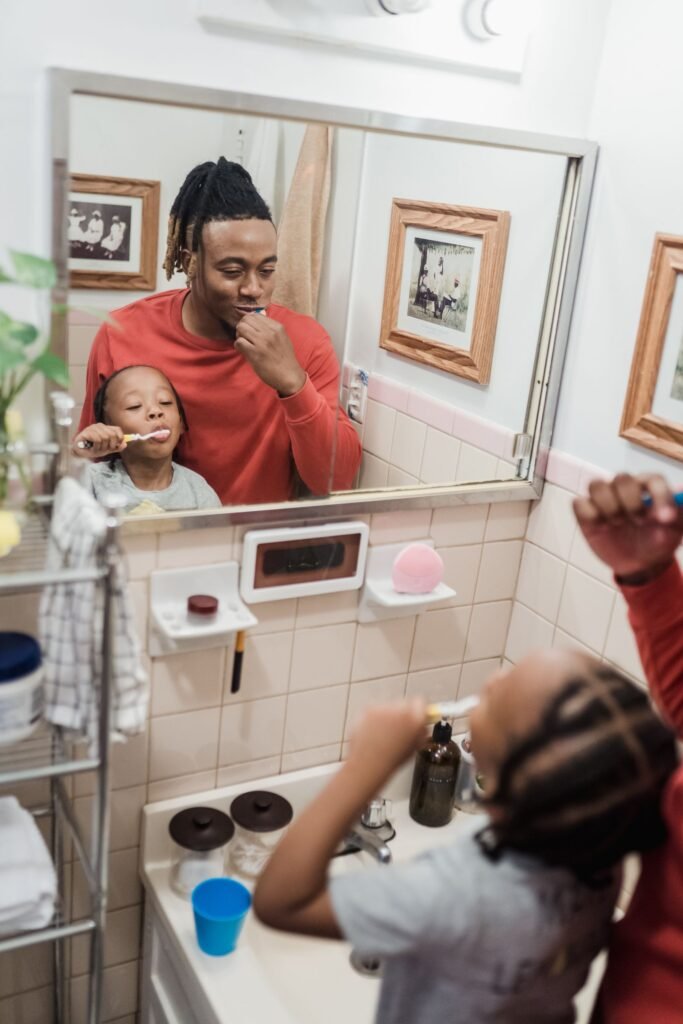
Teeth stay whiter longer when you limit contact time with staining drinks like coffee, tea, and wine, keep up a consistent brushing routine with proper timing, and use a maintenance product between bigger whitening treatments. No whitening method, powder, strips, or LED, is permanent, so maintenance is what actually determines how long a result lasts.
Every whitening method I’ve tested for this site fades eventually. What varies is how fast, and how much control you actually have over that.
Why whitening fades no matter what method you used
Peroxide-based methods bleach the tooth, but new staining accumulates the same way it always did — your habits didn’t change just because your teeth got whiter. Powder-based methods never changed the tooth’s underlying color to begin with, so “fading” there is really just new surface stain rebuilding on top of a cleaner baseline.
Either way, the timeline is the same basic idea: whatever you were doing that stained your teeth in the first place is still happening, unless you specifically change it.
The habits that actually slow it down
Drinking coffee or tea through a straw meaningfully reduces contact with your front teeth, which are the ones everyone actually sees. It felt ridiculous the first time I did it at my desk. It works.
Rinsing with water right after a staining drink helps a little, mostly by washing away loose residue before it sets. I’d call it a nice habit, not a fix on its own — don’t rely on it as your main strategy.
Waiting about 30 minutes after coffee or anything acidic before brushing matters more than people think, since brushing softened enamel wears it down faster and doesn’t actually remove more stain than waiting would. I go into the full logic behind that timing in my piece on brushing frequency.
Maintenance products, by method
If you whitened with something peroxide-based, like an LED kit, an occasional touch-up session is what actually holds the result, not a one-and-done treatment. In my own testing, color started fading around week three, and a single follow-up session brought it most of the way back. I go through that timeline in my WellaWhite review.
If you’re maintaining with a no-peroxide powder, the “maintenance” is really just continuing to use it as your regular toothpaste rather than a special treatment. That’s the appeal of that category — the daily habit and the maintenance are the same action. I tested BriteWite for six weeks with exactly that routine.
Gum health is a separate maintenance conversation from tooth color, but a mouth in bad shape doesn’t photograph as “white” no matter what your teeth look like on their own. That’s part of why I also tested a chewable built around gum and microbiome support, even though whitening wasn’t its purpose.
What’s not worth obsessing over
Baking soda scrubbing, “whitening” mouthwash used as a primary strategy, and daily use of high-concentration products beyond what’s instructed are all more likely to cause enamel wear than meaningfully extend a whitening result. More aggressive isn’t the same as more effective here, and I’d rather you keep your enamel intact than chase an extra few days of shine.
Frequently asked questions
How long does teeth whitening actually last?
This varies by method, but most whitening results start fading within a few weeks to a couple of months without maintenance, depending on diet and habits like coffee or wine consumption. Peroxide-based methods and no-peroxide powders fade differently, but neither is permanent.
Does drinking through a straw really help keep teeth white?
Yes, to a meaningful degree. A straw reduces direct contact between staining drinks and your front teeth, which are the teeth most visibly affected by staining.
Should you brush your teeth right after whitening?
No — the same 30-minute waiting period after acidic foods or drinks applies regardless of whether you’ve recently whitened. Brushing softened enamel wears it down without actually improving the result.
What foods stain teeth the fastest after whitening?
Coffee, tea, red wine, and dark sauces are the most common culprits, largely due to tannins and other pigment compounds that bind to enamel. Freshly whitened teeth aren’t more stain-prone than before, but any new staining is more noticeable against a whiter baseline.
Do whitening touch-ups work as well as the first treatment?
Generally yes, for peroxide-based methods like LED kits, an occasional touch-up session can restore most of the original result rather than requiring a full redo. For no-peroxide powders, ongoing daily use functions as continuous maintenance rather than discrete touch-ups.
This article is for informational purposes only and reflects my personal experience across multiple products. It is not dental advice and doesn’t replace a consultation with your dentist about your specific oral health.