

Whitening works differently, or not at all, depending on what’s actually on your teeth. Natural enamel responds to peroxide and to polishing. Braces, retainers, veneers, crowns, and fillings mostly don’t, and that mismatch is the thing that trips people up. Here’s what actually changes.
I get versions of this question a lot from readers who’ve already got dental work and don’t want a surprise.
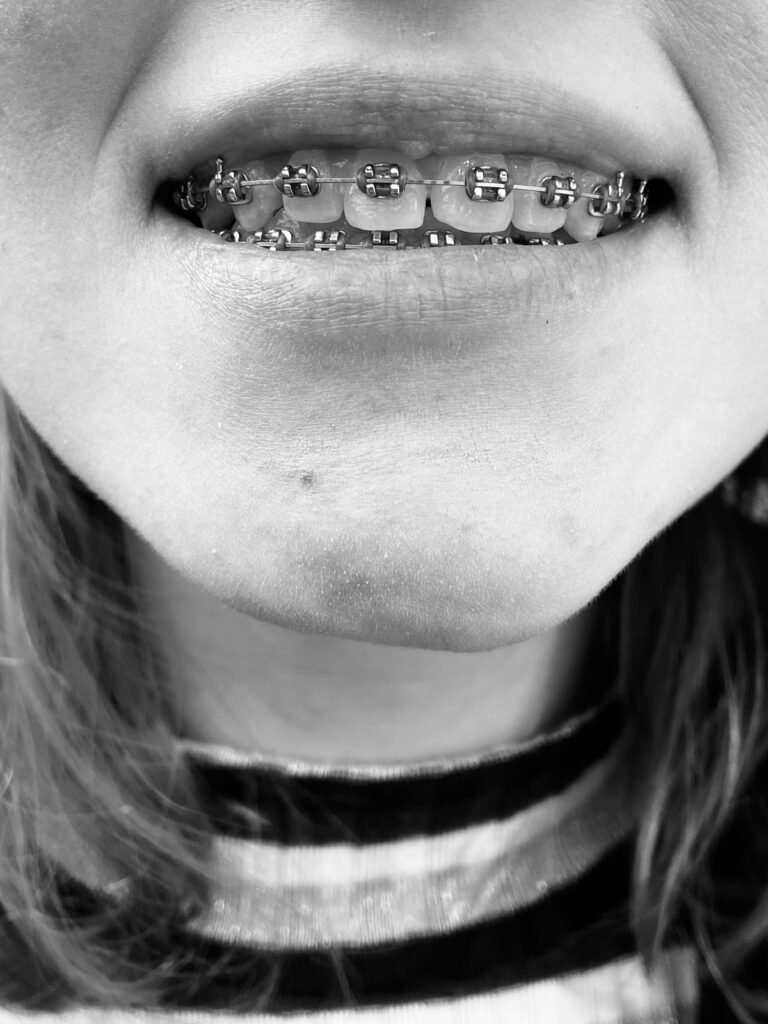
Braces: whitening creates a two-tone risk
If you whiten while wearing braces, the enamel under each bracket doesn’t get exposed to the whitening product. Everything else does. When the brackets eventually come off, you can end up with a checkerboard pattern: whiter enamel around each bracket, an untouched square underneath. It fades over time as the exposed enamel catches up, but it’s a real, visible effect for weeks.
Most dentists recommend waiting until brackets are off before doing any whitening treatment for exactly this reason. If you’re using a whitening toothpaste or a no-peroxide powder daily throughout treatment, the unevenness is much less pronounced, since it’s gentler and applied constantly rather than in a concentrated session.
Retainers: less risk, one real gotcha
Clear retainers themselves don’t stain the way enamel does, but they can trap whitening gel against your teeth longer than intended if you’re not careful about timing, and some retainer plastics can discolor from strong peroxide exposure over repeated use. Rinsing your retainer and letting any whitening product fully clear before putting it back in avoids most of this.
Veneers, crowns, and fillings: they don’t whiten at all
This is the one people are least prepared for. Veneers, crowns, and composite fillings are made of porcelain or resin, not natural tooth enamel, and whitening chemistry doesn’t change their color. Peroxide targets discoloration inside natural enamel. Restorative materials are a fixed shade, chosen to match your teeth at the time they were placed.
If you whiten your natural teeth after getting a crown or veneer years earlier, you can end up with a visible mismatch: your real teeth get lighter, the restoration stays exactly the same shade it always was. That’s a cosmetic problem, not a safety one, but it’s the kind of thing worth knowing before you start a whitening routine, not after.
The practical fix, if this applies to you: talk to your dentist about the order of operations. Some people whiten first, then get visible restorations matched to the new, lighter shade afterward, specifically to avoid this mismatch.
What’s actually safe if you have dental work
A no-peroxide whitening powder is the lowest-risk starting point if you have a mix of natural teeth and dental work, since it works by gentle polishing rather than chemical bleaching, and it won’t create the bracket-shadow effect braces can cause with a concentrated peroxide session. I tested one for six weeks and go through the specifics in my BriteWite review. It still won’t change the color of a crown or veneer, nothing does, but it’s gentler on the surrounding natural enamel.
For anything peroxide-based, checking in with your dentist first is worth the five-minute conversation, especially if you have a mouth full of mixed dental work and want to avoid an uneven result. I cover the enamel safety side of whitening separately here, including who should be extra careful in general.
Frequently asked questions
Can I whiten my teeth while wearing braces?
You can, but most dentists recommend waiting until brackets come off, since the enamel under each bracket doesn’t get exposed to the whitening product, which can create a visible two-tone effect once the braces are removed.
Does teeth whitening work on veneers or crowns?
No. Veneers, crowns, and composite fillings are porcelain or resin, not natural enamel, and whitening chemistry doesn’t change their color. Only your natural teeth will lighten, which can create a visible mismatch with existing restorations.
Is it safe to whiten teeth with a retainer?
Generally yes, with one caution: make sure any whitening gel or residue is fully rinsed away before putting a retainer back in, since trapping product against your teeth for longer than intended isn’t what the product is designed for.
What’s the safest whitening option if I have dental work?
A no-peroxide whitening powder is the gentlest starting point for natural teeth alongside dental work, since it polishes rather than bleaches. It won’t change the color of any crown, veneer, or filling, nothing does, but it avoids the uneven exposure issue that a concentrated peroxide session can cause around braces.
Will my crown or veneer match my teeth after I whiten?
Not automatically. Since restorations don’t whiten, your natural teeth can end up visibly lighter than an existing crown or veneer. If this matters to you, talk to your dentist about timing, whether to whiten before getting new visible restorations, or how to handle a mismatch with existing ones.
This article is for informational purposes only and reflects general research and my own experience. It is not dental advice and doesn’t replace a consultation with your dentist, especially if you have braces, veneers, crowns, or other dental work.