
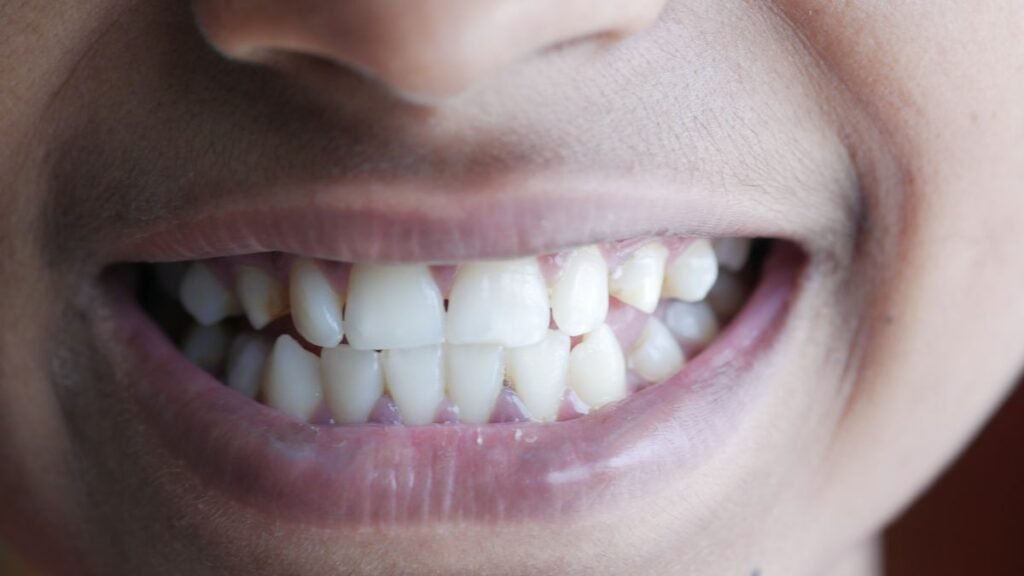
Teeth usually look yellow for one of three reasons: surface stain from food and drink, enamel thinning with age so the naturally yellow layer underneath shows through, or an intrinsic color you were born with. Brushing well handles the first one. It can’t do much about the other two, which is why plenty of people brush twice a day and still see yellow in the mirror.
This is the question I get most, usually phrased with some frustration. “I brush, I floss, why are they still yellow?” Here’s the actual answer, broken down by cause, because the fix depends entirely on which one you’re dealing with.
Reason one: surface stain
Coffee, black tea, red wine, cola, dark berries, curry, tobacco. All of them leave pigment on a thin protein film that coats your enamel through the day. Brushing removes some of it. Over years, the rest builds into a stain layer that a regular toothpaste can’t fully lift.
This is the yellow that responds to whitening. A whitening toothpaste or a no-peroxide powder polishes the stain layer off. If you want to know whether the toothpaste route is enough for you, I went through that in this piece, and coffee specifically gets its own breakdown in why coffee stains teeth.
Reason two: thinning enamel and the dentin underneath
Here’s the part that surprises people. Enamel is slightly translucent, and the layer beneath it, dentin, is naturally yellow to light brown. As enamel wears and thins with age, or from acid erosion, more of that dentin color shows through. Reviews of tooth structure describe enamel as a semi-translucent shell, which is exactly why what’s under it matters to the color you see.
So a person can have spotless, plaque-free teeth that still read yellow, because the enamel is thin and the dentin is doing the talking. Acidic diets, aggressive brushing, grinding, and reflux all speed the thinning. You can’t scrub your way out of this one. Whitening treatments with peroxide can lighten the dentin’s apparent color, and protecting the enamel you have left matters more than any polish. I get into that in whether whitening damages enamel and hydroxyapatite versus fluoride.
Reason three: the color you started with
Natural tooth color varies a lot between people, set by genetics. Some enamel is thicker or whiter, some dentin is darker. Neither is healthier than the other. The ADA is clear that whitening toothpaste won’t change this intrinsic shade, and it’s why two people with identical habits can have noticeably different smiles.
There’s also a smaller group: teeth discolored by tetracycline antibiotics taken in childhood, by too much fluoride during tooth development, by a knock that killed the nerve in one tooth, or by aging combined with old fillings. These often look gray, brown, banded, or affect a single tooth, and they respond poorly to regular whitening. That’s a dentist conversation, not a drugstore one.
Why brushing alone doesn’t fix it
Brushing removes plaque and disrupts new stain before it sets. That’s its job, and it’s essential. But it physically cannot reach below the surface, and it can’t add thickness back to worn enamel or repaint dentin. If anything, brushing harder to “get them whiter” thins enamel faster and makes the yellow worse over time.
A soft brush, light pressure, and waiting 30 to 60 minutes after acidic food or drink before you brush protects the enamel that’s keeping your teeth looking lighter. More pressure is not more white.
How to figure out which one you’ve got
Rough guide. If the yellow is fairly even, worse near the gumline and between teeth, and you’re a daily coffee or tea drinker, it’s mostly surface stain, and it’ll respond to whitening. If your teeth have looked this shade for as long as you can remember and the color is uniform, it’s likely intrinsic. If they’ve gotten more yellow or more translucent at the edges over the last decade, that’s enamel thinning.
Most adults are some mix of all three. A cleaning and an honest look from a dentist will tell you how much is removable stain versus structure, which is the thing worth knowing before you spend money on whitening. If it’s mostly surface stain, my at-home whitening rundown covers the options, and keeping teeth white between treatments covers the maintenance.
Frequently asked questions
Why are my teeth yellow even though I brush every day?
Brushing removes plaque and new surface stain, but it can’t reach set-in stain below the surface, can’t rebuild thinned enamel, and can’t change the natural color of the dentin underneath. Those account for most yellowing in people with good hygiene.
Does yellow mean my teeth are unhealthy?
Not by itself. Natural tooth color varies with genetics, and thin enamel showing yellow dentin isn’t decay. Yellowing paired with sensitivity, rough spots, or dark patches is worth a dental check, but color alone isn’t a health signal.
Can yellow teeth become white again?
Surface-stain yellowing responds well to whitening toothpaste, powders, strips, or professional treatment. Yellowing from thin enamel or intrinsic color is harder to shift and may need peroxide whitening or a cosmetic option discussed with a dentist.
Does enamel really get thinner with age?
Yes. Enamel wears gradually from chewing, acidic foods and drinks, grinding, and abrasive brushing. As it thins and becomes more translucent, the naturally yellow dentin beneath shows through more, so teeth can look more yellow over time.
Will brushing harder make my teeth whiter?
No, and it backfires. Heavy pressure and stiff bristles wear enamel faster, which lets more yellow dentin show through. Use a soft brush with light pressure, and wait 30 to 60 minutes after acidic food or drink before brushing.
What causes a single tooth to turn yellow or gray?
Usually past trauma that affected the nerve, or an old filling or root canal. A single discolored tooth doesn’t respond to regular whitening and should be looked at by a dentist, who can discuss internal whitening or a veneer or crown.
This article is for informational purposes only and reflects general research and my own experience. It is not medical or dental advice and doesn’t replace a consultation with your dentist about tooth discoloration or your options.